R-Value Explained: How to Choose the Ideal Insulation for Your Home.
What Is R-Value?
R-Value measures how well a material resists heat flow—higher R-Values mean better insulation. It’s a key metric used in construction to quantify how effective insulation is in roofs, walls, and floors. When you stack materials, their R-Values add together.
Why R-Value Matters
A higher R-Value means less energy loss and better year-round comfort: lower heating bills in winter and cooler interiors in summer. But remember: poor installation, gaps, or air leakage can significantly reduce the actual performance of insulation, no matter how high the R-Value is on paper.
R-Value Highlights by Material
Here’s a general idea of R-Values per inch for common materials (approximate ranges):
- Fiberglass batts: R-2.9 to R-3.8
- Cellulose (blow-in): R-3.2 to R-3.8
- Open-cell spray foam: R-3.5 to R-3.9
- Closed-cell spray foam: R-6.0 to R-7.0
How Much R-Value Do You Need?
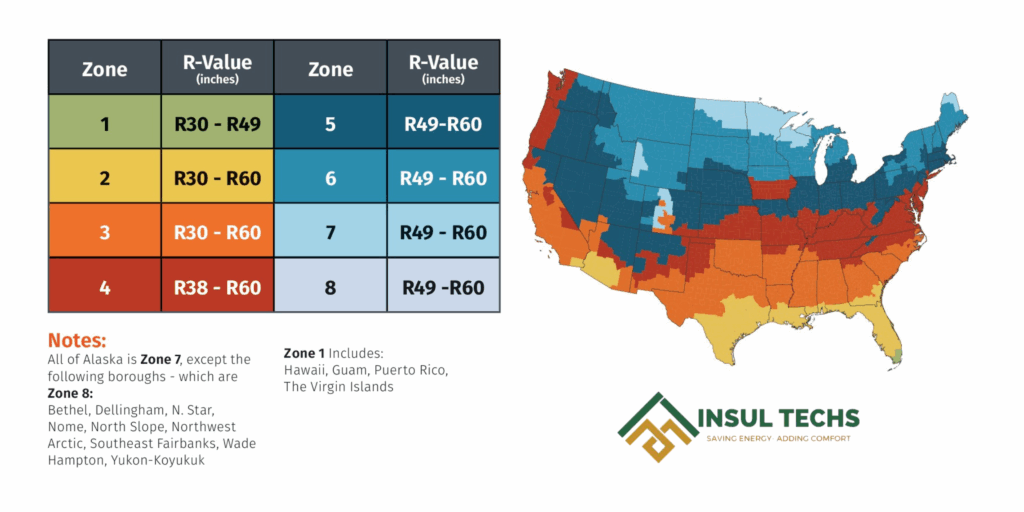
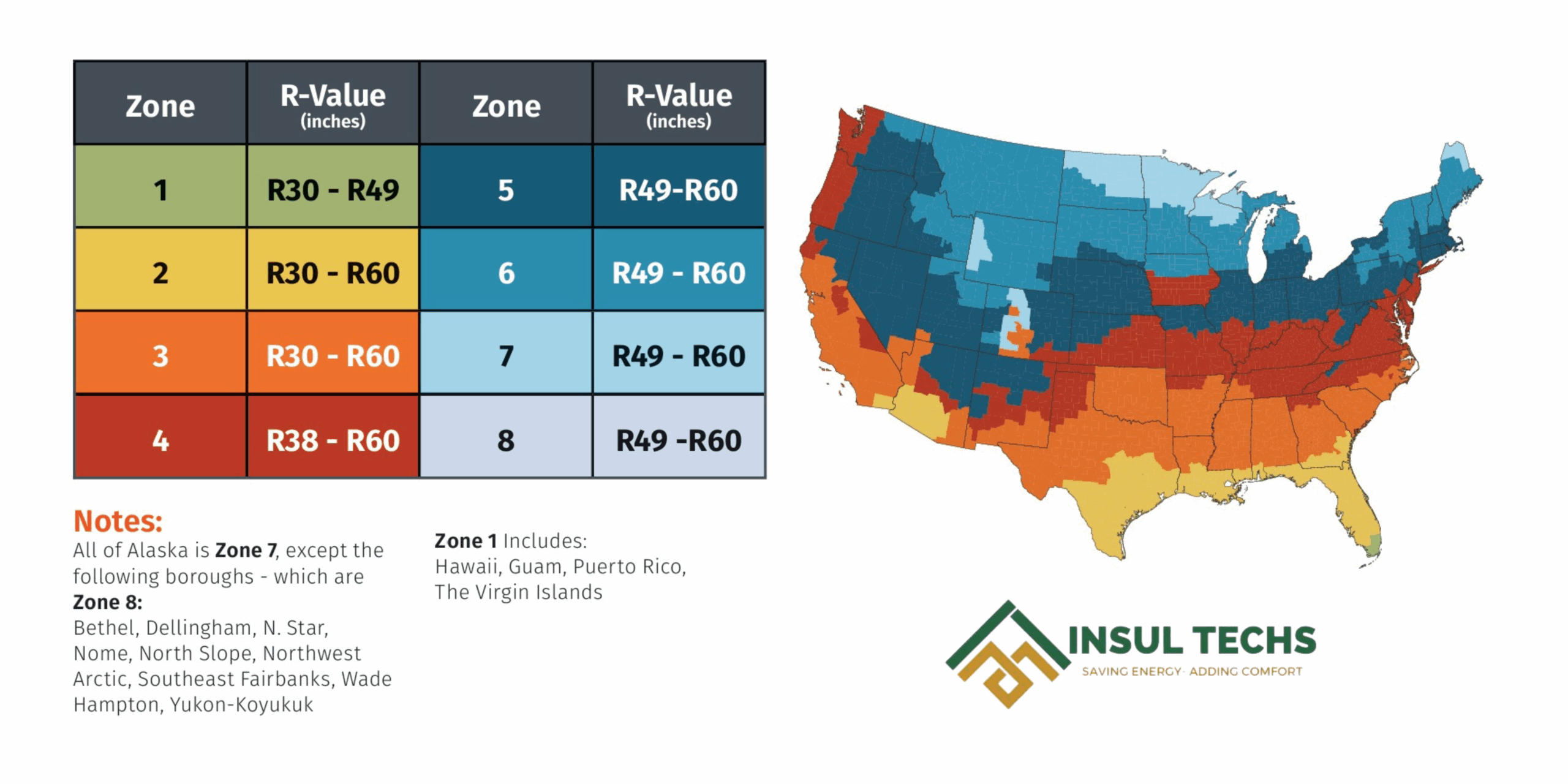
Recommended R-Values vary by home area and climate zone. In our service areas, typical recommendations are:
- Attic: R-30 to R-38
- Walls: R-13 to R-21
- Floors & Crawlspaces: R-19
Always check local building codes—requirements may differ slightly depending on your exact region and project type.
R-Value Isn’t Everything
While crucial, R-Value is not the entire solution. Air sealing, preventing moisture, and minimizing thermal bridging are equally important. Even with high R-Value insulation, poorly sealed windows, doors, or framing can undermine effectiveness. For best results, go for an integrated approach: good material, proper installation, and tight building envelope.
Final Thoughts
- Determine your climate zone and check local code requirements.
- Compare R-Values per inch across materials and choose the one that fits your needs.
- Factor in installation quality, moisture risks, and air-sealing.
- Use a system-based strategy—don’t just rely on R-Value alone.
By choosing wisely, you’ll unlock energy savings, year-round comfort, and a healthier home.